

Overview
This tour plan making specially Bangladesh most important North bangl heritage part complete. Here we are complete our SAARC cultural capital, UNESCO world heritage part and Temple capital Puthia and most beautiful Longest river in Bangladesh Padma .
Highlight :
Day-1
1.National Monument Bangladesh.
2.Atia Mosque (1609)
3.weavers village
4.Noborotno Temple (1664)
5.Mahasthangarh(7
th century)
Day-2
1.Sompur Mahavihara (8th century built it and UNESCO world heritage site in 1985)
2.Kusumba Mosque (1558)
3.Ganges River/Padma River
Day-3
1.choto sona mosque (1493 to 1519.)
2.Darashbari Masjid (1479)
3.Shah Niamatullah Mosque (1639-1660)
Dhania Chalk Mosque (1483)
Day-4
1.Puthia Rajbari (1895)
2.Boro(large) Govinda Temple. (1823-1895)
3.Chhoto(Small) Ahnik
4.Chhoto (small) Govinda
5.Large Shiva Temple (1823)
6.Dol Temple
Khania Dighi Mosque (1480)
Itinerary
We begin our journey toward the gateway to North Bengal, Bogura, around 8:30–9:00 AM. This full day is filled with historical, cultural, and local experiences.
- Bangladesh National Monument (Savar) – A powerful symbol of Bangladesh’s history and the sacrifices made during the Liberation War.
- Atia Mosque (Delduar, Tangail) – Built in 1609 during the Mughal period, this mosque showcases a unique blend of Mughal and Bengal architectural styles, adorned with intricate terracotta ornamentation.
- Tangail Weaving Industry – Tangail is famous for its handloom weaving tradition. We will visit local weavers to see how the region’s world-renowned Tangail sarees are made.
We pause for lunch before continuing to Sirajganj.
- Noborotno Temple (“Dol Moncho”) – Hatikumrul, Sirajganj – A magnificent 3-storey 18th-century Navaratna-style terracotta shrine built between 1704–1728 by Ramnath Bhaduri, inspired by Dinajpur’s Kantajew Temple. Once crowned with nine pinnacles, it is adorned with exquisite floral and deity terracotta panels, making it Bangladesh’s largest historical monument of its kind.
- Mahasthangarh (Bogura) – The oldest archaeological site in Bangladesh, dating back to at least the 3rd century BCE. Once the ancient city of Pundranagara, it contains fort ruins, ancient inscriptions, and relics from early urban civilization.
Additional En Route Activities – Along the way, we will also explore rural village life, witness traditional curd-making in Bogura, and visit the Bogura Night Railway Line Vegetable Market, a bustling hub of local trade under the glow of night lights.
Overnight Stay: Bogura
Today we travel to Rajshahi, one of Bangladesh’s cleanest cities, renowned for its fresh air, peaceful charm, and rich cultural heritage. Along the way, we will visit two of the country’s most remarkable historical sites.
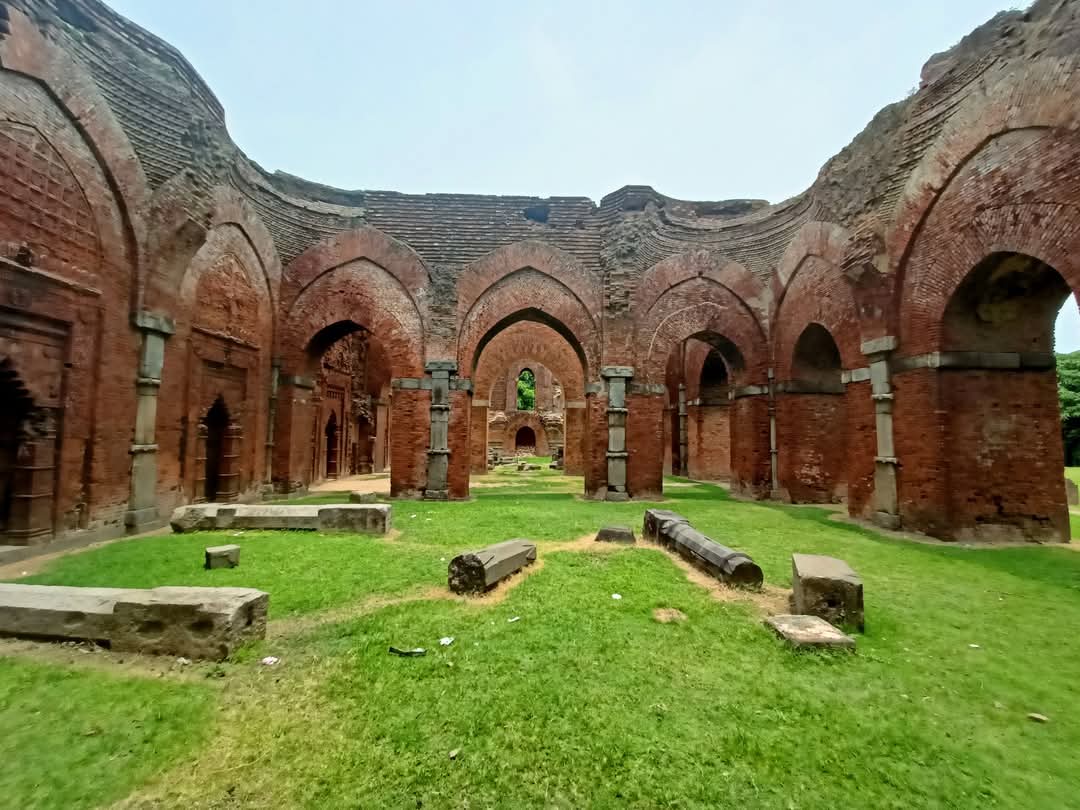
- Paharpur Mahavihara (Naogaon) – A UNESCO World Heritage Site and the largest Buddhist monastery south of the Himalayas, built in the 8th century during the Pala dynasty. Once a thriving center for Buddhist learning and culture, the site features a grand central stupa, intricate terracotta artworks, and rows of monastic cells, making it a must-visit for history and architecture lovers.
We will enjoy lunch on the way before continuing our journey.
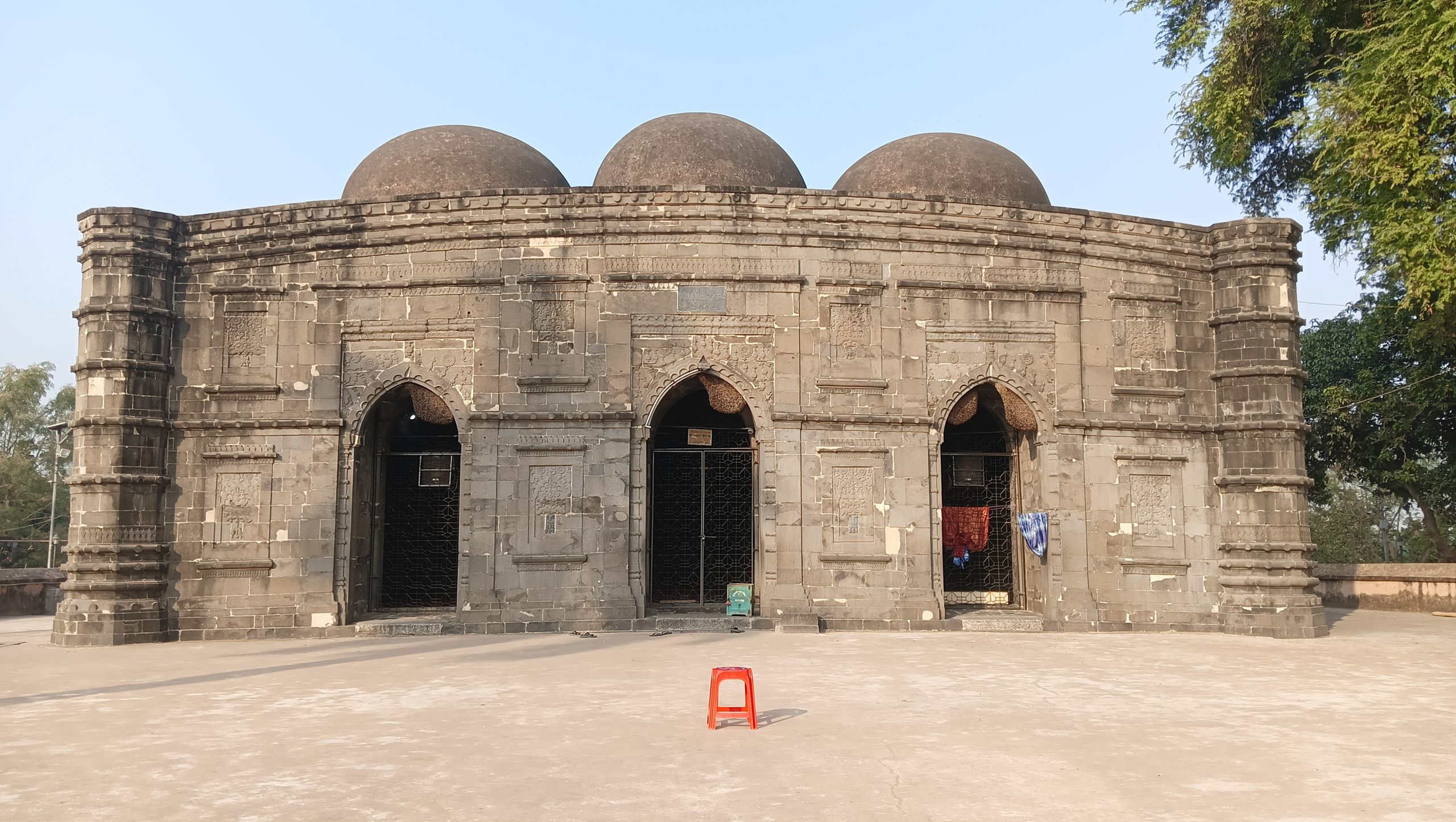
- Kusumba Mosque (Naogaon) – Known as the “Black Gem of Bengal”, this 16th-century stone mosque was built in 1558–59 under Suri rule and later renovated after the 1897 earthquake. With its six domes, octagonal corner towers, and intricate stone carvings, it is a masterpiece of medieval Bengal architecture. The mosque sits beside a historic pond and is surrounded by a walled courtyard.
- Ganges / Padma River (Rajshahi) – Upon arriving in Rajshahi, we will head to the scenic banks of the Padma River, one of Bangladesh’s largest rivers, flowing from the Himalayas. The river is famous for its breathtaking sunset views, peaceful boat rides, and vibrant riverside life.
Overnight Stay: Rajshahi
Today we journey to Chapainawabganj, famously known as the mosque capital and mango capital of Bangladesh. This region offers a treasure trove of medieval Islamic architecture and rich cultural history.
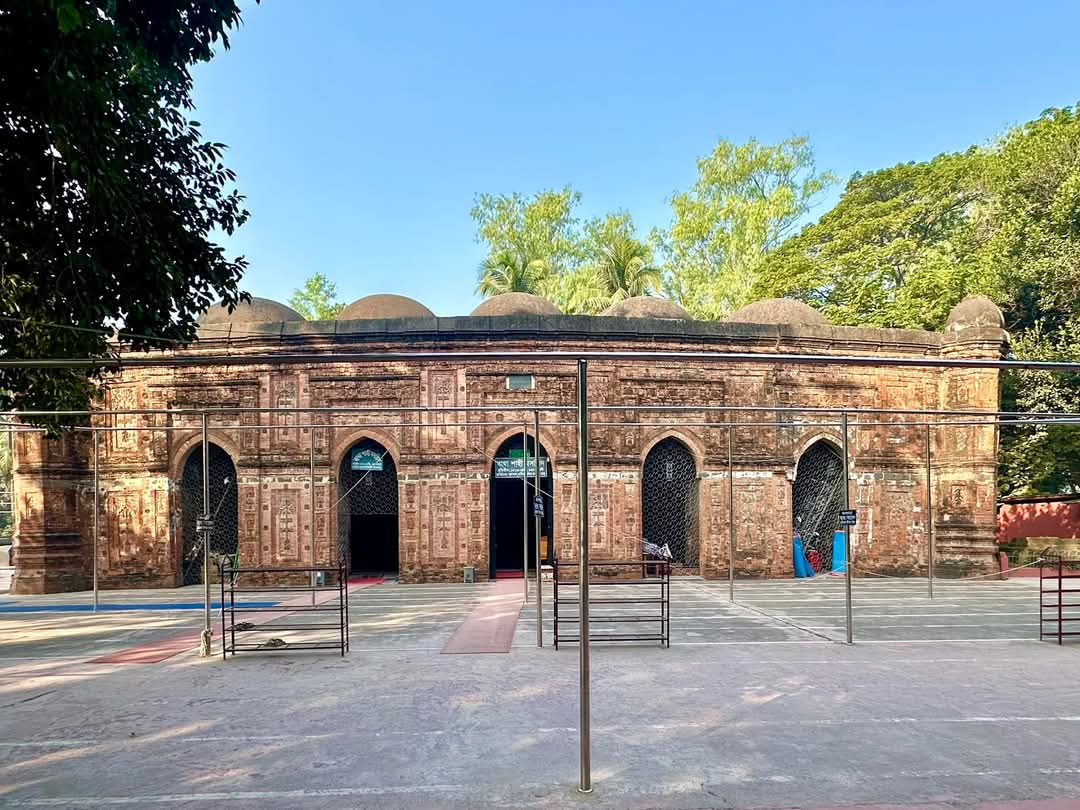
- Choto Sona Mosque – Built in the 15th century, this beautiful example of Sultanate architecture is named the “Golden Mosque” due to its once gold-gilded domes. It features graceful stonework, ornate arches, and elegant proportions that reflect the grandeur of the Bengal Sultanate era.
- Darasbari Mosque – Constructed in 1479 by Sultan Shamsuddin Yusuf Shah, this mosque once stood as a grand Friday congregational mosque within a madrasa complex. Although the roof and verandah have long since collapsed, its red brick terracotta ornamentation, ruined arches, and royal gallery still exude historical charm.
We will have lunch before continuing our exploration.
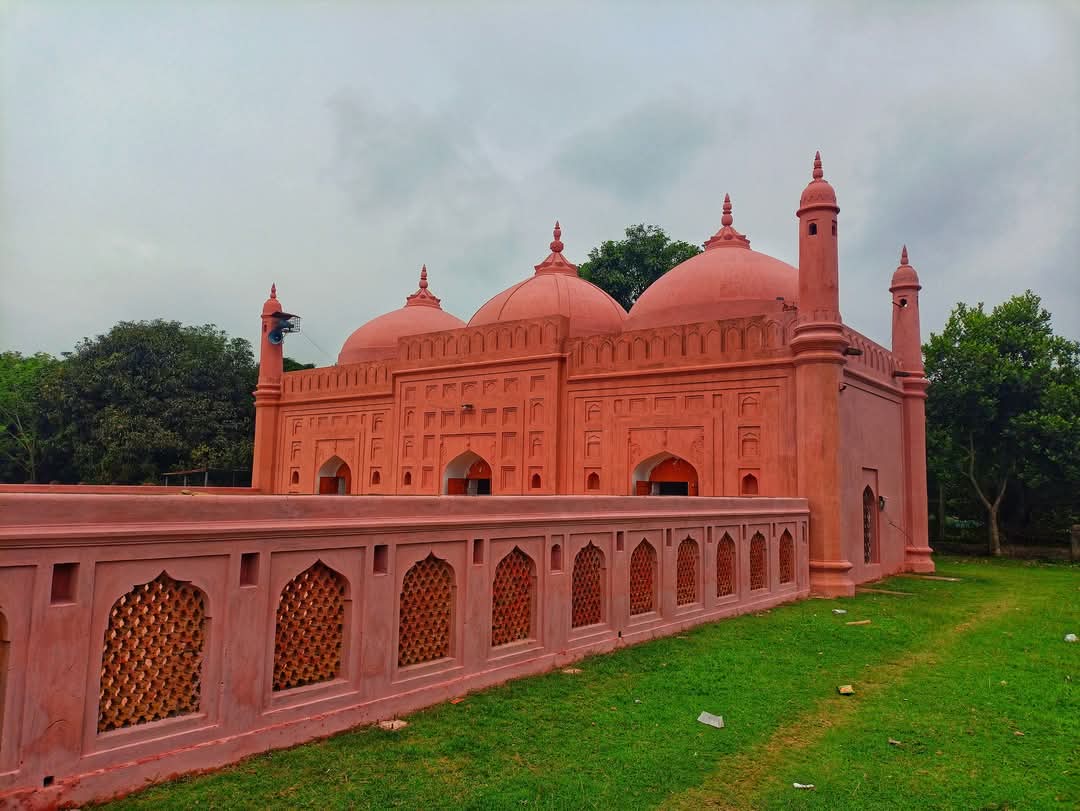
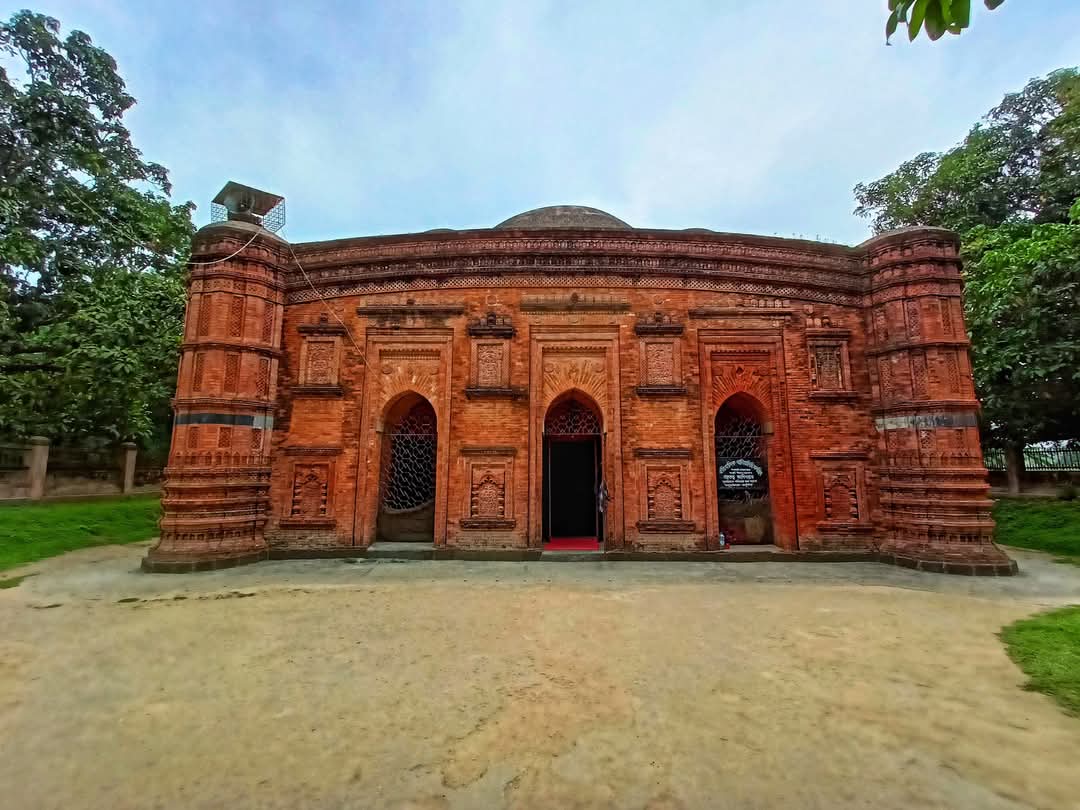
- Shah Niamatullah Mosque (1639–1660) – Built during the Mughal era in honor of the revered Sufi saint Shah Niamatullah, this mosque features a single dome and elegant terracotta decoration. It remains a serene spiritual site that blends Mughal architectural influence with devotional heritage.
- Khania Dighi Mosque (1480) – A Sultanate-era mosque commissioned by a royal officer, notable for its massive domed hall and thick brick walls. Situated beside a large pond (dighi), it offers both historical significance and tranquil beauty.
Overnight Stay: Chapainawabganj City
Today we begin an early morning departure for Dhaka, covering a journey of approximately 300 km. On the way, we will explore the stunning temple architecture of Puthia, known as the Temple Capital of Bangladesh.
- Shiva Temple (Puthia) – A majestic Pancha Ratna (five-spire) temple built by Rani Bhubonmoyi Devi between 1823–1830. This is the largest Shiva temple in Bangladesh, overlooking the tranquil Shiv Sagar Lake. Its sanctum houses a massive black basalt Shiva-linga, and its towering spires create a striking silhouette against the sky.
- Radha-Krishna Temple (Rajbari Complex) – A striking 19th-century red-brick shrine built by the Puthia royal family (1823–1895). Featuring five pinnacles and exquisitely detailed terracotta panels depicting Radha-Krishna themes, it is still an active place of worship with a Krishna idol in the sanctum.
- Other Puthia Heritage Sites – We will also explore the Ahnik Temple, Small Govinda Temple, Puthia Rajbari Museum, and the Dol Temple, each showcasing unique examples of Bengal’s temple architecture and rich terracotta art.
After our temple tour, we continue the drive back to Dhaka, with an estimated arrival around 8:00 PM.
Includes/Excludes
Cost Includes
- >Accommodation: 3 night 3/4 Star hotel room.
- > Transportation: Air conditions private car
- > Meals: breakfast and lunch.
- > Permission & Sightseeing: permission and sightseeing fees are included in the program
- > Tour Guide: Dedicated English speaking tour guide
Cost Excludes
- >All personal cost.
- >Dinner
- >Guide tips